
Examples and figures in this article are illustrative. They are not Zoney prices, typical reseller results, margin promises or retention guarantees. Customer revenue, direct costs and payment timing depend on the actual agreement and service workload.
A digital signage reseller can make money several ways: sell the display, mark up the media player, charge for installation, sell the software, provide ongoing support and manage customer content.
Each can produce revenue, but they don't create the same type of business. Hardware and installation can generate larger payments when a project closes. Software and managed services can generate smaller payments that continue month after month.
For a reseller building a long-term digital signage business, the question isn't whether hardware or software is better. The better question is: What role should each play in your revenue model?
How Digital Signage Resellers Make Money
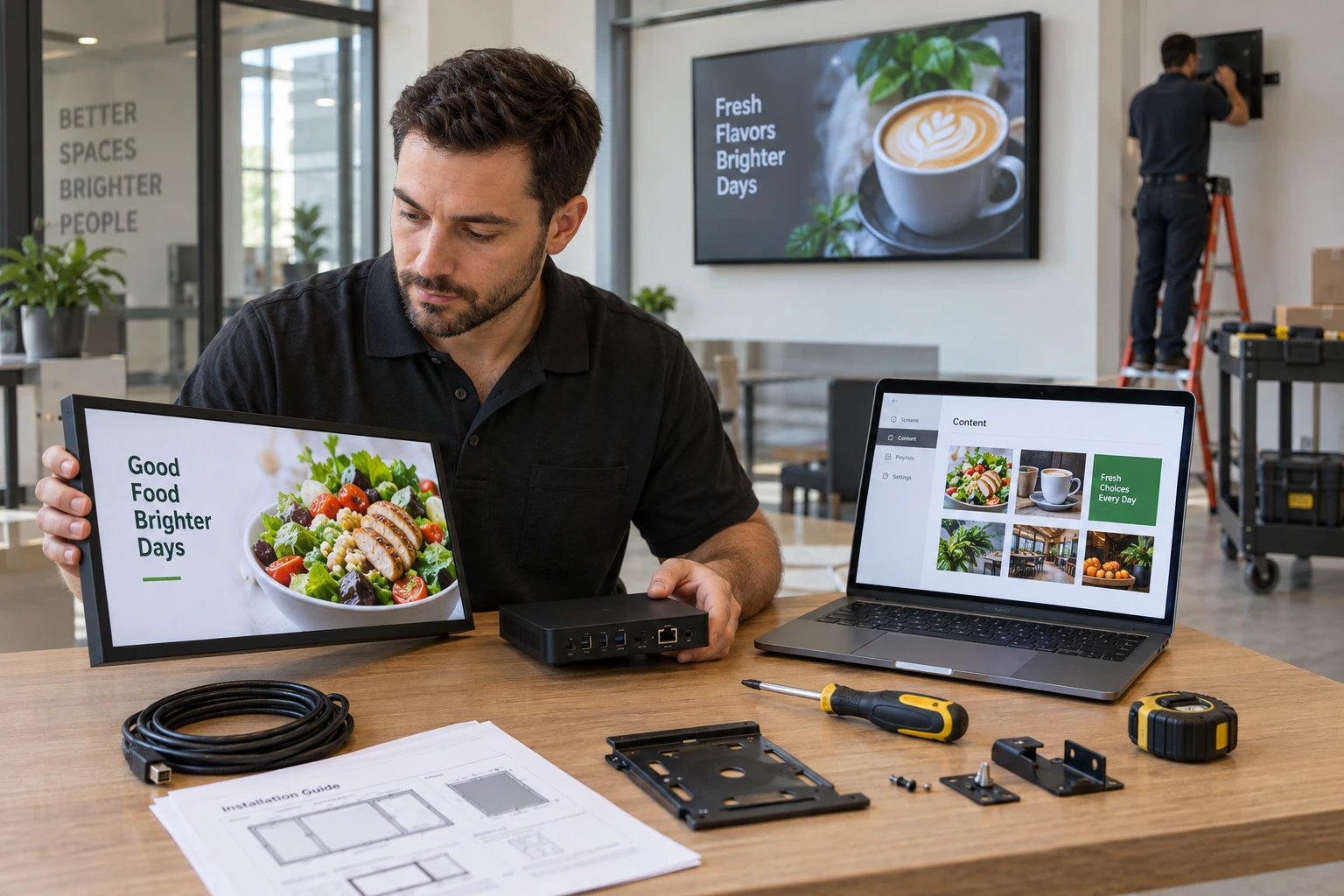
A typical deployment can contain revenue from displays, media players, mounts and accessories, installation, software, support, content services and network management. A strong model can use several of these rather than depending entirely on one.
The Appeal of Hardware Revenue
Hardware is easy for customers to understand. The reseller purchases products, adds a markup and includes them in the proposal.
Suppose equipment costs $4,500 and is sold for $5,500. The project creates $1,000 in hardware gross profit before other expenses. Installation and configuration fees can add gross profit after their direct labor and delivery costs are deducted. Net profitability also depends on the other expenses of running the business.
But once the equipment has been sold, that transaction is finished.
Hardware Revenue Has to Be Replaced
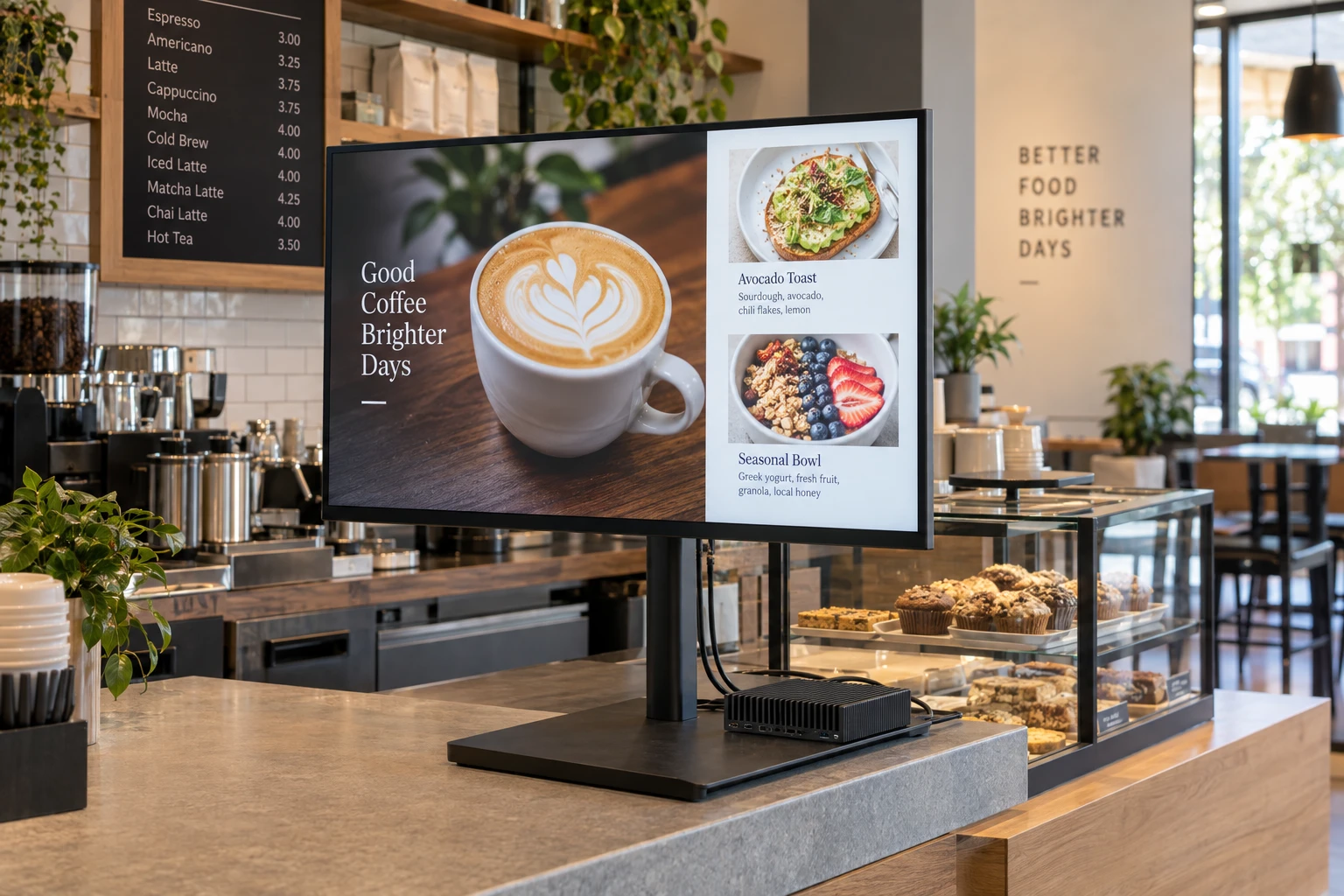
A $15,000 project in January does not automatically create February revenue. A project-based business needs a continual pipeline of new installations to replace completed projects.
Hardware isn't the problem. Dependence on hardware is.
Hardware Margins Can Also Be Competitive
Displays and media players are easy to price-check. Customers can compare model numbers online, putting pressure on markup. Commercial hardware may justify higher pricing through duty cycle, warranty, brightness and other specifications, but the reseller still needs to provide value beyond moving a box.
Installation Creates Value Beyond Hardware
Site surveys, mounting, cable management, network configuration, player setup, software configuration, playback testing and training are harder to compare with an online hardware price. Expertise becomes part of the product.
Software Changes the Revenue Model
Suppose a 10-screen customer pays $400 per month for software and the direct platform cost is $200. The recurring software contribution before other business expenses is $200 per month, $2,400 per year and $12,000 over five years if the account stays active and price and cost remain unchanged. The customer revenue over those periods is $400 per month, $4,800 per year and $24,000 over five years.
Support labor and any other direct delivery costs must also be deducted if they are part of the service. The original installation can still produce hardware and labor gross profit; ongoing software adds a separate recurring contribution.

Recurring Revenue Compounds Across Customers
At an illustrative average customer fee of $150 per month, 25 active customers produce $3,750 MRR; 50 produce $7,500; 100 produce $15,000; and 250 produce $37,500. At 250 customers, multiplying current MRR by 12 gives $450,000 in annualized recurring revenue. This is a run-rate calculation, not collected cash or gross profit. It assumes the stated active customer count and excludes changes from cancellations, discounts and account growth.
Don't Confuse Revenue With Margin
Revenue is the amount charged for the service or product. Gross profit is revenue less its direct cost; gross margin expresses that gross profit as a percentage of revenue. Cash flow records when money is received and paid.
A $10,000 hardware sale with $8,500 in direct cost produces $1,500 in gross profit and a 15% gross margin before other expenses. A $300 monthly managed account with $125 in direct monthly cost produces $175 monthly gross profit: $2,100 in a year, $6,300 in three years and $10,500 in five.
Compare lifetime customer revenue and lifetime contribution separately. The contribution examples above assume the account stays active with unchanged revenue and direct costs; they are not forecasts of retention or net profit.
Customer Lifetime Value Changes How You Sell
A lower-margin hardware sale may make sense if it helps acquire a customer that can generate profitable recurring revenue for years. This doesn't mean selling hardware at a loss. It means evaluating the entire relationship.
At the portfolio level, measure recurring revenue, churn and expansion.
Software Can Increase Customer Retention
Ongoing software keeps the reseller connected to the customer and can lead to additional screens, locations, content services, replacements, upgrades and other technology projects.
Managed Services Can Be More Valuable Than Software Alone
Some customers want the technology but don't want to manage it. Resellers can package remote monitoring, content scheduling, graphic updates, user management, priority support, player administration and account reviews.
Build a Revenue Stack
Layer 1: Hardware.
Layer 2: Deployment.
Layer 3: Software.
Layer 4: Management.
Layer 5: Content.
The first two create project revenue. The remaining layers can create recurring revenue.

Example: One Customer, Five Revenue Streams
A six-screen restaurant group can generate revenue from hardware, installation, software, support and content management. If the restaurant later opens another location, the same model can be repeated without acquiring another company.
Hardware Can Help Win the Account
Some customers prefer one provider for the complete solution. Hardware can create project gross profit. Cash arrives when the customer pays, while supplier payment terms determine when the reseller must fund the equipment. The mistake is treating the hardware sale as the end of the transaction rather than the beginning of the relationship.
Don't Force Hardware When the Customer Already Has It
A hardware-agnostic platform can allow compatible existing equipment to remain in service. Lowering the initial investment may help win a profitable software and service account.
Proprietary Hardware Can Affect Your Model
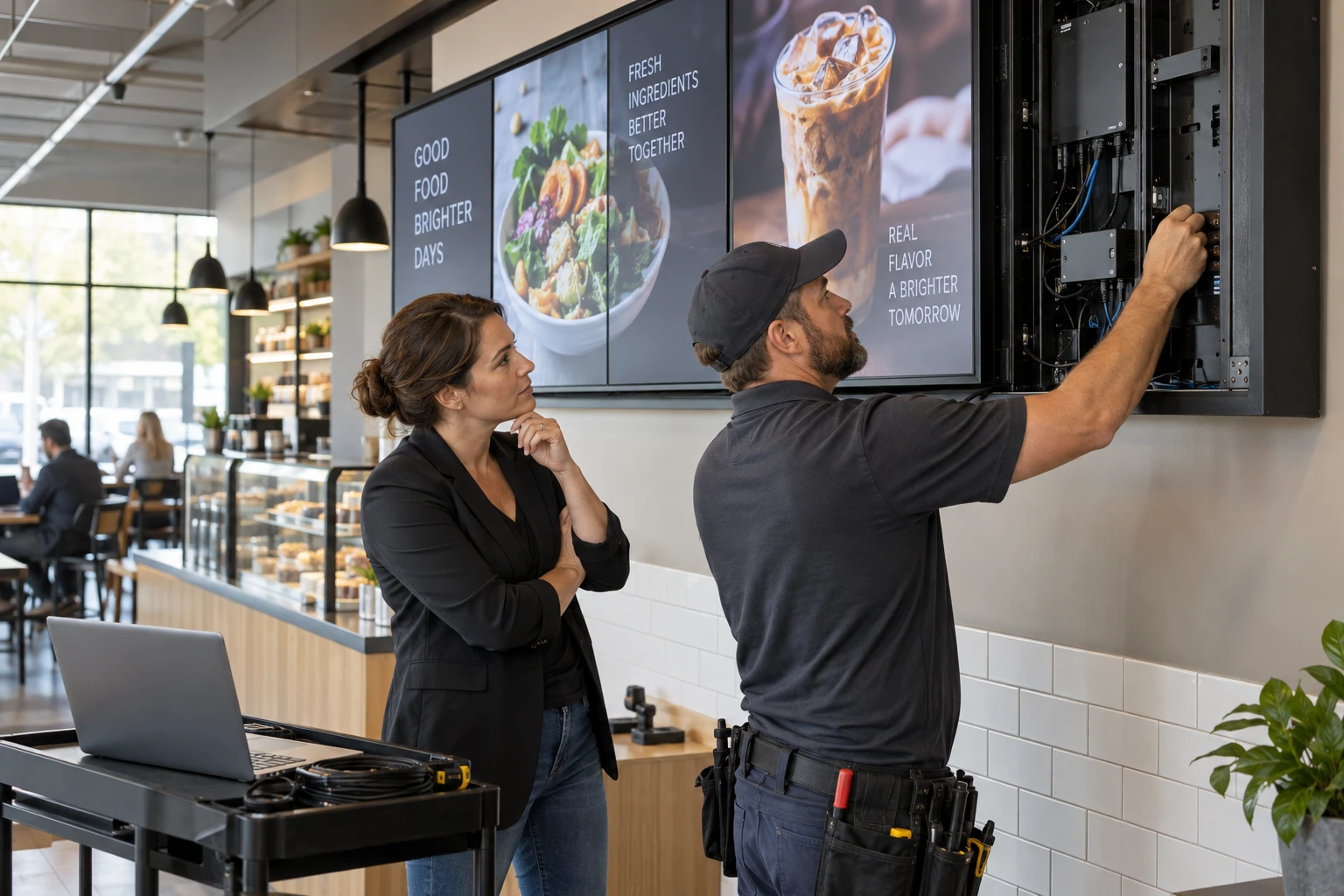
Ask whether every customer must buy a specific player, whether existing hardware can be used, who controls pricing, whether the reseller can source alternatives and what happens when a device needs replacement.
Before committing to a device strategy, evaluate hardware flexibility.
Price Services Based on Value and Workload
Define limits around content updates, support, monitoring and onsite visits. An "unlimited" service can become unprofitable when a high-usage customer consumes large amounts of labor.
Track Gross Profit by Revenue Type
Separate hardware, installation, software, support, content and managed-service revenue and direct costs. This reveals where the business actually earns its margin.
Don't Ignore Cash Flow
Project revenue can provide larger upfront payments while recurring revenue builds gradually. Collect hardware costs before ordering equipment and use deposits where appropriate.
Set a Recurring-Revenue Target
Use a recurring-revenue target alongside a direct-cost budget and a retention assumption. Calculate the customer count required, then test the support and content workload needed to serve those accounts. Revenue targets alone do not show whether the model produces a useful contribution.
Measure Revenue Per Customer, Not Just Revenue Per Screen
Track average monthly revenue per customer and average recurring gross profit per customer. A smaller screen account buying support and content may be more valuable than a larger software-only account.
Use Hardware to Open the Door and Services to Grow the Account
For many resellers, the strongest model is hardware plus software plus services. Hardware provides an immediate transaction, installation adds expertise, software establishes the recurring relationship and support/content increase account value.
Choose a Platform That Leaves Room for Your Margin
Zoney provides the software layer partners can combine with their own hardware, installation and services. Evaluate platform cost, supported equipment and the work required to serve the customer before setting the price of your offering. No partner margin or customer price is implied here.
Build the Business Around the Customer Relationship
If every month depends entirely on selling another batch of screens, the reseller remains tied to a project-driven revenue cycle. Recurring software and managed services allow previous sales to continue producing revenue while new customers are added.
Use the component economics to plan the wider reseller business.
Discuss Your Service Model
Start a free trial to review the platform, or talk with Zoney about your customer requirements.