
Separate Shared Content From Local Information
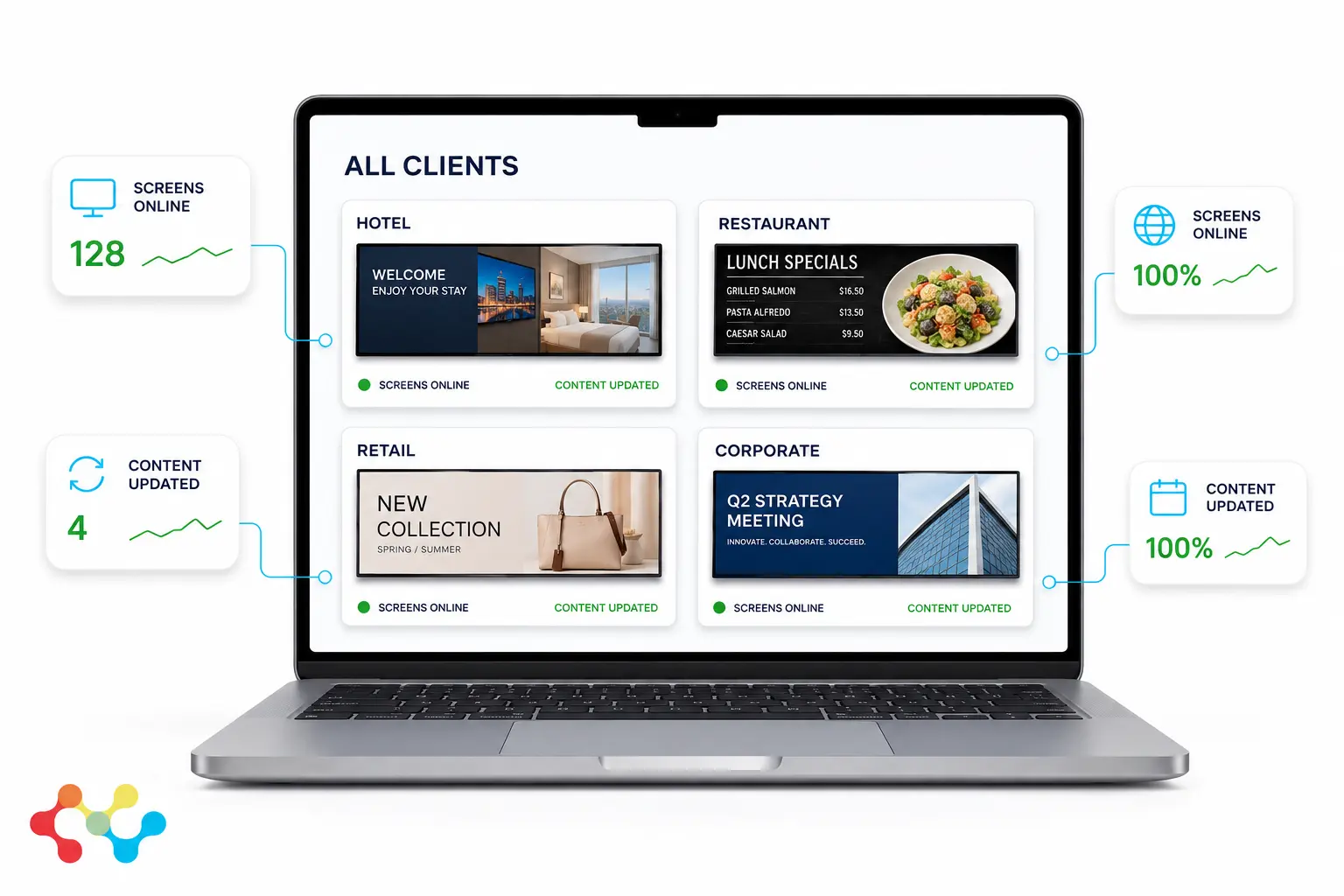
Identify the content that should be consistent everywhere, such as brand messages or organization-wide announcements. Then identify what varies by location, such as hours, local events or location-specific offers.
Plan those two types of content together. A shared template can keep the design consistent while leaving clearly defined space for local information.
Give Each Role a Clear Scope
Decide who can edit shared designs, who can update local information and who approves a change before it appears. Match access to those responsibilities using the controls available in your chosen platform.
Keep a record of account ownership and review access when staff change roles. A simple permissions plan is easier to maintain than a collection of shared logins.
Plan for Expiry, Not Just Publication
Every temporary message needs an end point. Record when a promotion, event announcement or seasonal message should disappear, and use scheduling where the platform supports it.
Agree on what plays next. An approved default layout gives the team a sensible fallback when a campaign ends or a new piece of content is delayed.
Pilot the Process Before Expanding It
Try the workflow at a small number of locations with different needs. Ask local teams to request an update, review it and confirm that it appeared on the intended display.
Document what caused confusion. Refine the naming conventions, approval steps and launch checklist before repeating the process across additional locations.