

You can choose a digital signage platform, build service packages and create a pricing model, but none of it becomes a business until you have customers.
Your first digital signage customer may already be a company you know.
The objective is not to find companies searching for the phrase "digital signage." It is to find businesses with communication problems that digital signage can solve.
Start With the Problem, Not the Screen
Restaurants may need changing menus and promotions. Retailers may need product and seasonal messaging. Medical offices may need waiting-room information. Companies may need employee communications. Multi-location businesses may need consistent information across sites.
Those are sales conversations.
1. Start With Existing Customers
Review existing accounts for televisions, printed promotional signs, waiting rooms, menu boards, multiple locations, employee areas and frequently changing information.
You may find customers already using screens poorly or updating them manually.
How to Add Digital Signage to Your Existing Product Portfolio

2. Ask Your Team What Customers Are Already Requesting
Salespeople, technicians and account managers may already hear questions about putting promotions on TVs, remote updates, multi-location control and scheduling.
Teach customer-facing employees to recognize those signals.
3. Pick One or Two Industries
If you do not have existing customers, narrow the target market.
Restaurants, gyms, medical practices, dealerships, retailers, hotels, apartment communities and corporate offices can all have relevant use cases.
4. Build an Industry-Specific Demo
Create sample content that resembles what the prospect would actually display.
A restaurant demo can show menu content. A gym demo can show class schedules and promotions. A medical-office demo can show waiting-room information.
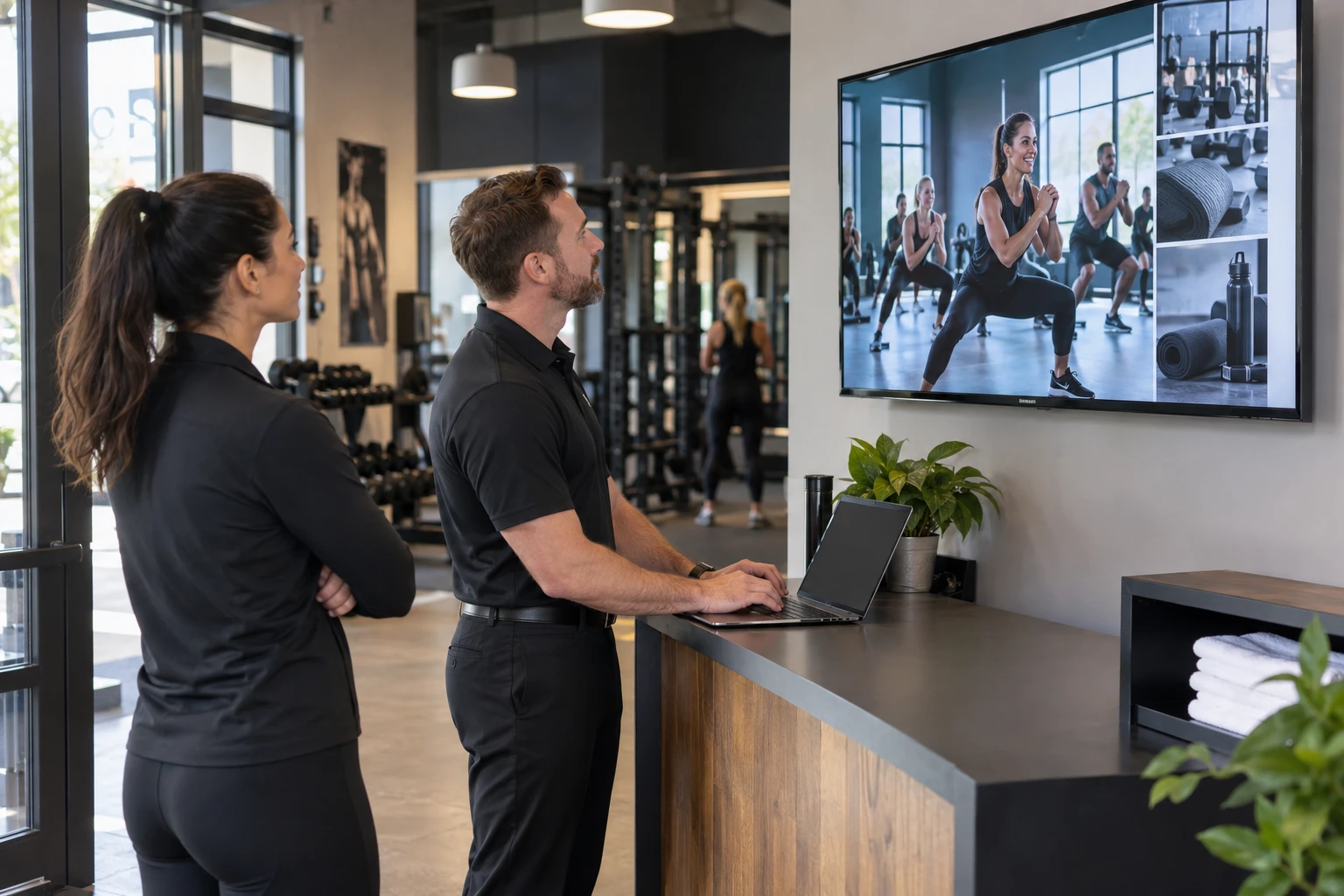
5. Use a Real Screen When Possible
Show uploading an image, changing a playlist, scheduling content, updating a screen remotely and managing multiple screens.
A laptop, media player and screen can be enough.
6. Build a Prospect List Based on Visible Opportunities
Look for existing screens, printed schedules, promotional posters, customer-facing displays and multiple locations.
A smaller qualified list can be more useful than thousands of random names.
7. Personalize Your Outreach
Reference the prospect's industry, existing screens, locations, current signage or communication needs.
A few relevant sentences can show why you contacted that business.
8. Contact the Right Person
Decision-makers may include owners, general managers, operations managers, marketing directors, IT managers, facilities managers or communications managers.
9. Ask Questions Before Presenting the Product
Ask how information is updated, how often it changes, who handles it, whether there are multiple locations and whether the customer wants to manage screens internally.
The answers tell you what to demonstrate.

10. Don't Lead With Technical Features
Explain business outcomes.
Instead of describing remote scheduling as a feature, explain that next month's promotion can be scheduled now and appear automatically.
11. Offer a Small Starting Point
One screen, department, location or use case can make the first approval easier and can function as a pilot.
12. Don't Give Away the Entire Project to Win the First Customer
Understand the real cost of a pilot or discount and make the decision intentionally.
How to Price Digital Signage Services for Your Customers
13. Use Referrals
Ask satisfied customers whether they know another business that could use a similar system.
14. Build Referral Relationships With Other Service Providers
AV installers, electricians, low-voltage contractors, sign companies, marketing agencies, IT providers and consultants may encounter signage opportunities.
15. Partner With Installers if Installation Isn't Your Strength
A qualified installation partner can let you concentrate on sales, software, account management, content and support.
16. Use Your Website to Target Specific Searches
Create pages and articles around actual markets and needs, such as restaurant signage, gym signage, medical-office signage and multi-location management.
17. Use Local Search
Clearly communicate where you operate, what you provide and how customers can contact you.
Real deployment photos and customer reviews can strengthen local visibility.
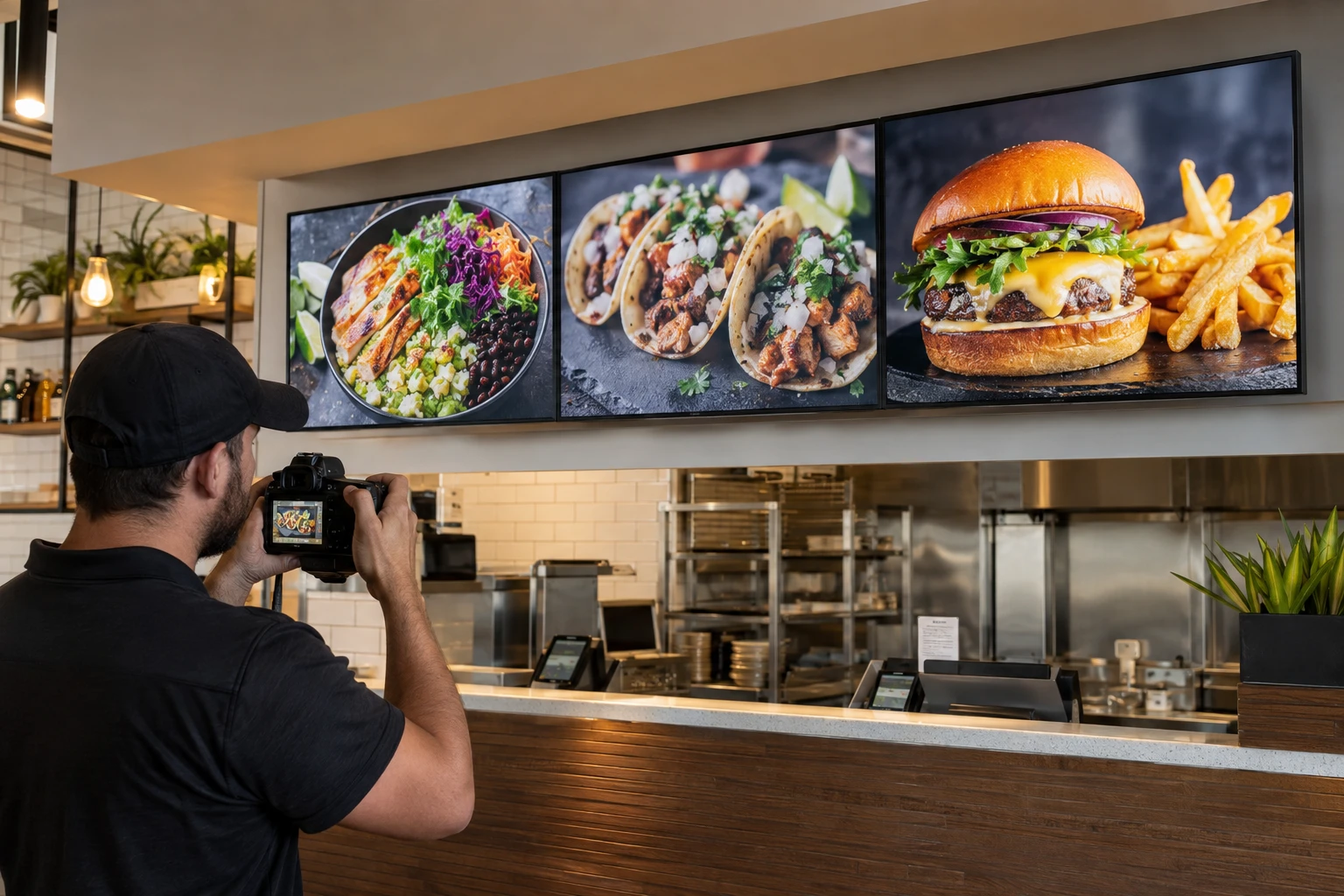
18. Turn Every Installation Into Marketing Material
With customer permission, document installed screens, before-and-after conditions, content examples, use cases and locations.
Use that material in case studies, social posts, presentations and sales follow-up.
19. Build Case Studies Around the Problem
Explain the problem, solution, operation and result.
Avoid unsupported performance claims.
20. Follow Up
Track prospects, contacts, next steps, follow-up dates, project estimates, current signage and locations.
Consistent follow-up can matter more than sending more cold messages.
21. Look for Expansion Opportunities After the First Sale
Customers may add screens, departments, locations, content services, device management and support.
How to Build Recurring Revenue With Digital Signage
22. Keep the First Sales Process Simple
- Identify a qualified business.
- Research its communication environment.
- Contact the right person.
- Ask discovery questions.
- Demonstrate a relevant application.
- Inspect the site when necessary.
- Prepare a clear proposal.
- Follow up.
- Close the project.
- Install and onboard.
- Ask for a referral.
- Look for expansion.
Your First Customer Teaches You More Than Your First 1,000 Leads
Real conversations teach you what customers care about, what they do not understand, what they value and which objections appear.
Start with a focused market, a working demonstration and a clear offer.
Build the Technology Around a Business You Can Sell
For a company serving multiple businesses, the platform should support that operating model.
Zoney provides digital signage technology for resellers, integrators and service providers that want to sell and manage signage for their own customers.
Return to How to Start a Digital Signage Business in 2026: A Complete Guide or continue with How to Become a Digital Signage Reseller: A Complete Guide, or start a free Zoney trial or schedule a partner call.