

Starting a digital signage business does not require manufacturing displays or developing your own software platform.
A provider can combine existing digital signage technology with hardware, installation, content, support and other services to create an offering for business customers.
The opportunity is especially relevant for AV integrators, MSPs, IT service providers, sign companies, marketing agencies, technology consultants and entrepreneurs that want to add a technology service with both project and recurring revenue potential.
The process starts with deciding what type of business you want to build.
1. Decide What Type of Digital Signage Business You Want
Digital signage can support several business models.
You might become a full-service provider that supplies hardware, installation, software and support. You might focus primarily on software and managed services. An AV company might add signage software to display installations it already performs. An MSP might manage signage devices alongside other customer technology.
Your model determines what capabilities you need and which partners make sense.
10 Digital Signage Business Models for Entrepreneurs

2. Choose a Market You Can Reach
Trying to sell to every business can make early sales harder.
Choose a market where you understand the customer or can reach decision-makers.
Potential markets include restaurants, retail, medical offices, gyms, hotels, auto dealerships, property management, corporate offices and multi-location businesses.
If you already operate an AV, IT, sign or marketing company, start with customers you already serve.
3. Learn the Basic Components of a Digital Signage System
Most deployments include several basic pieces:
- A display
- A media player or supported smart-display environment
- Internet or network connectivity
- Digital signage software
- Content
The software lets users upload media, build playlists, schedule content and manage screens.
Understanding these components is enough to begin having productive customer conversations. You do not need to become a hardware engineer.
4. Choose a Digital Signage Software Platform
The software becomes the operational foundation of the service.
Look at how the platform handles customers, locations, users, permissions, screens, media players and content.
For a reseller or integrator, managing multiple unrelated customers is different from a company managing only its own screens.
Hardware flexibility also matters. A platform that supports multiple hardware environments can give the provider more options when designing deployments.
How to Choose the Best Digital Signage Software for Your Business
5. Decide How You Will Handle Hardware
You can sell displays and media players directly, allow customers to purchase some equipment themselves, or use a mixture of both approaches.
Many providers standardize a small group of preferred configurations so quoting, installation and support are easier.
Avoid purchasing large amounts of inventory before you know what customers will buy. Early projects can often be procured as they are sold.
6. Create a Simple Initial Offer
Your first offering does not need dozens of services.
A simple package might include:
- Hardware
- Installation
- Digital signage software
- Configuration
- Basic support
Once you understand what customers request, you can add content management, creative services, device monitoring or other managed services.
7. Set Your Pricing
Separate one-time project charges from recurring services.
One-time charges may include hardware, installation, configuration and training.
Recurring charges may include software, support, content management and device services.
Know your costs before deciding what to charge.
How to Price Digital Signage Services for Your Customers

8. Build Recurring Revenue Into the Model
Digital signage can continue producing revenue after installation.
Software, support, content management, device monitoring and account administration can all become recurring services.
The customer should understand from the beginning what is included in the initial project and what continues afterward.
How to Build Recurring Revenue With Digital Signage
9. Build a Demonstration System
Digital signage is visual, so a working demonstration can be a strong sales tool.
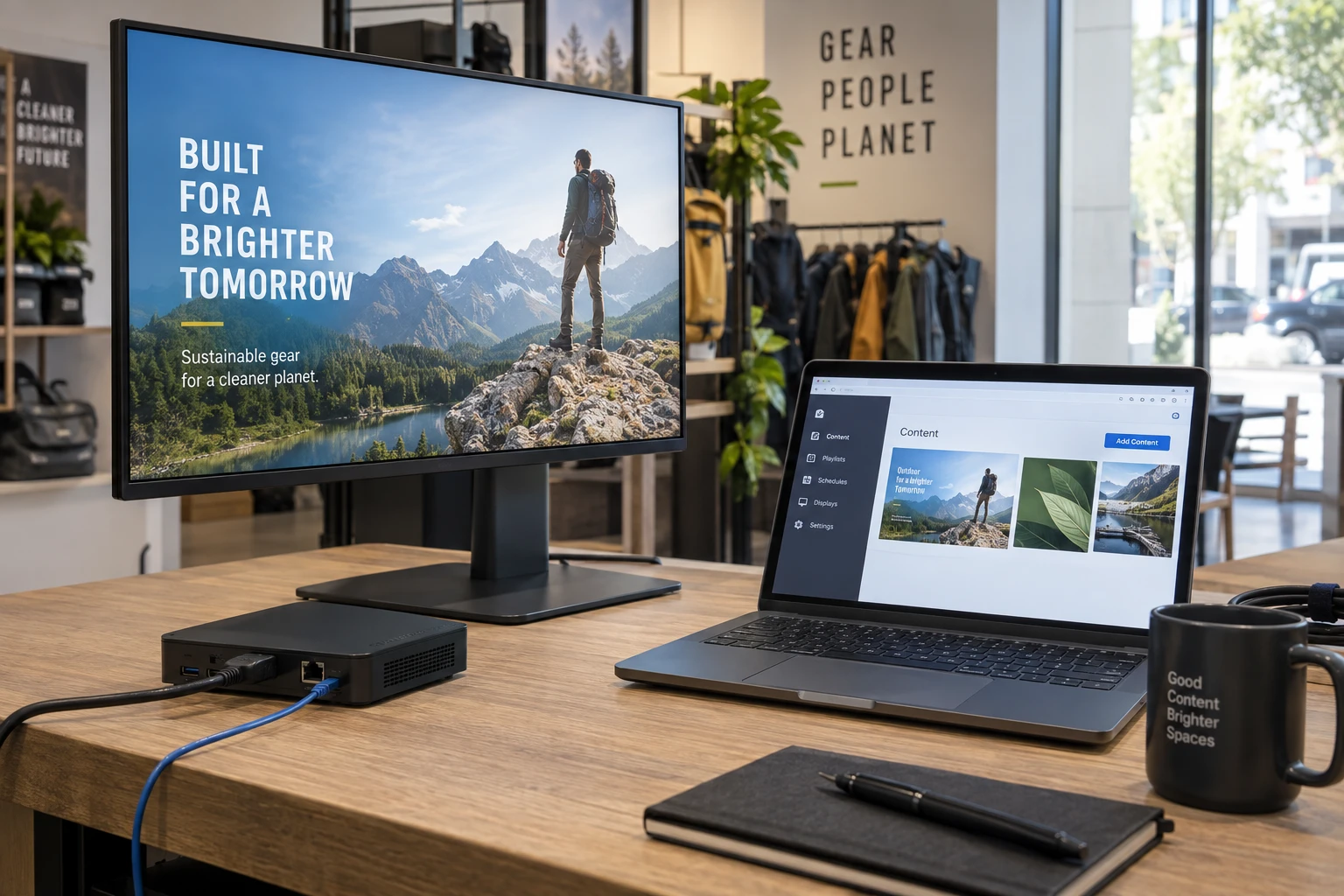
A basic demo can include a screen, media player and laptop. Show how content is uploaded, scheduled and changed remotely.
If you are targeting a particular industry, use content that resembles what that customer would actually display.
10. Find Your First Customers
Existing business relationships are often the best place to start.
Look for customers with televisions, printed promotional signs, waiting rooms, menu boards, multiple locations or frequently changing information.
If you are starting without an existing customer base, choose one or two industries and build a focused prospect list.
How to Find Your First Digital Signage Customers

11. Create a Repeatable Installation Process
Document what happens after a customer says yes.
Your process may include site review, hardware ordering, account creation, media-player configuration, installation, testing, training and handoff.
A repeatable process reduces mistakes and makes future deployments easier to quote and deliver.
12. Define Customer Support
Decide what support includes before selling it.
Clarify remote software assistance, device troubleshooting, on-site service, hardware replacement and content-related requests.
Clear boundaries make support easier for customers to understand and easier for your company to manage.
13. Expand Existing Accounts
A customer may start with one screen and later add more screens, departments or locations.
Additional services can also be introduced over time.
Account expansion can generate new project revenue and increase recurring revenue without acquiring a completely new customer.
14. Build Systems as the Business Grows
As customer volume increases, you may need stronger processes for sales, billing, support, inventory, installations and account management.
Standardize common hardware, packages and workflows where possible.
The goal is to avoid creating a completely different operating process for every customer.
How to Build and Scale a Digital Signage Reseller Business
15. Choose Technology That Fits the Business
The technology should support the company you are trying to build.
A provider serving multiple customers may need customer and location organization, granular users and permissions, flexible hardware options and tools that reduce repetitive administration.
Zoney is built for businesses providing digital signage to their own customers, with support for managing multiple customers, locations and users and flexibility across hardware environments.
You can concentrate on sales, deployment and customer service rather than developing the underlying digital signage platform.
Start With a Business Model, Then Build the Technology Around It
The first step is not buying a warehouse full of screens.
Choose the customer you want to serve, decide which services you will provide, understand your costs and create a repeatable offer.
Then assemble the technology and partners needed to deliver it.
Continue with Is a Digital Signage Business Profitable?, or start a free Zoney trial or schedule a partner call to evaluate the platform for your business.