
Digital signage companies can make money from much more than selling screens.
A complete digital signage deployment may involve hardware, installation, software, configuration, content, support and ongoing management. Each part of that relationship can represent a separate source of revenue.
That gives a digital signage provider two broad opportunities.
The first is project revenue earned when a customer purchases and installs a system.
The second is recurring revenue earned from software and services that continue after installation.
A company can focus heavily on one or combine several revenue streams into a complete service.
Understanding those options is one of the first steps in building a digital signage business model.
1. Selling Digital Signage Hardware
Hardware is the most visible part of a digital signage project.
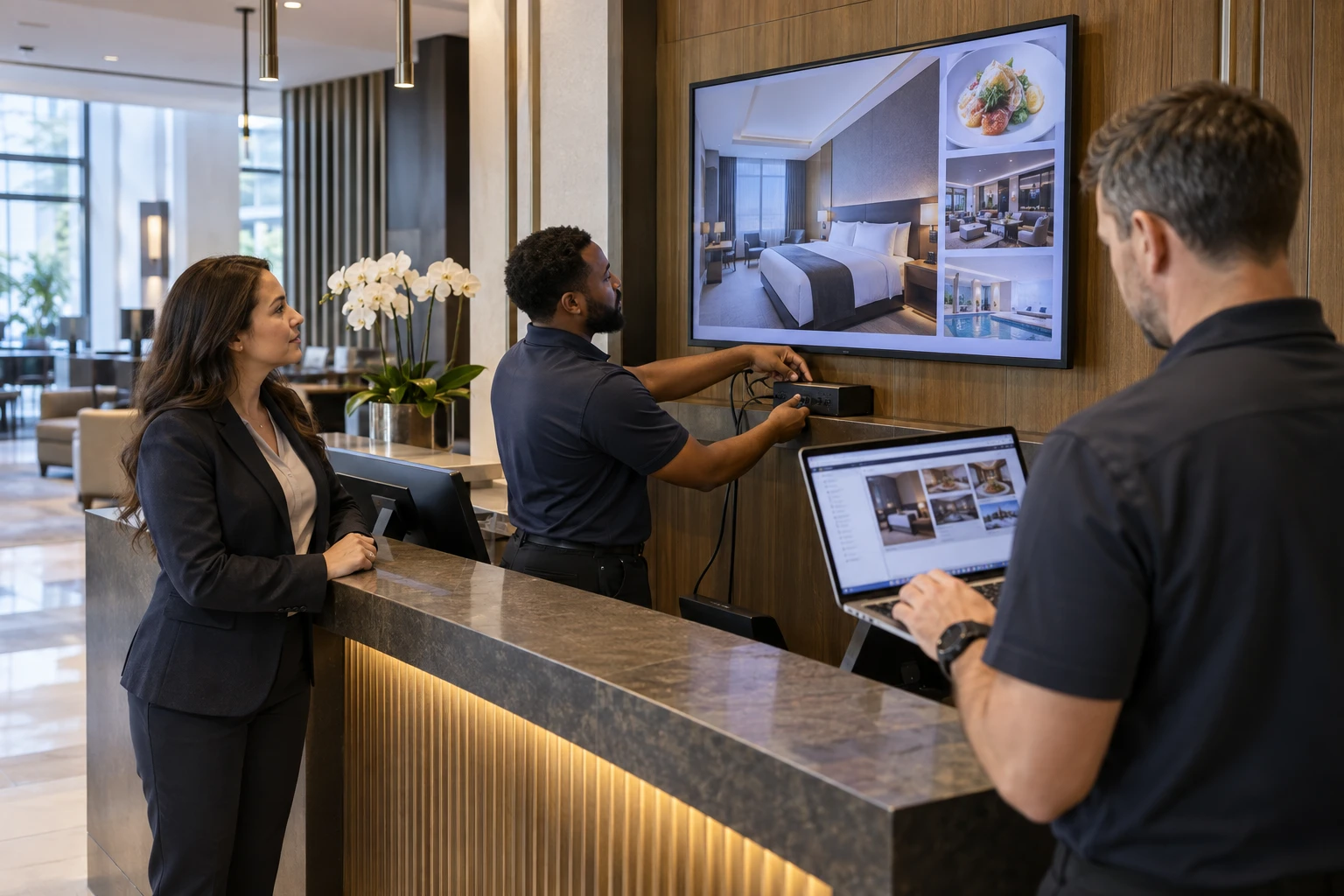
Depending on the installation, a provider may sell commercial displays, televisions, media players, mounts, cables, networking equipment, power accessories and other installation hardware.
The difference between the provider's cost and selling price contributes to the gross margin on the hardware.
Hardware can generate substantial revenue on larger deployments, but revenue and profit are not the same thing.
Customers can also compare hardware prices online. For that reason, many digital signage companies view hardware as one component of a larger solution rather than the entire business model.
Digital Signage Hardware vs. Software Revenue: Where Should You Make Your Money?
2. Media Player Revenue
Many digital signage systems use a media player connected to each display.
Depending on the platform and deployment, that player might run Android, Windows, Linux or another supported environment.
Providers can include the media player in the initial project price. A player may also need replacement later because of hardware failure, changing technical requirements or an upgrade.
What Is a Digital Signage Media Player and Which Type Should You Use?
3. Installation Revenue
Displays need to be installed, connected and configured.
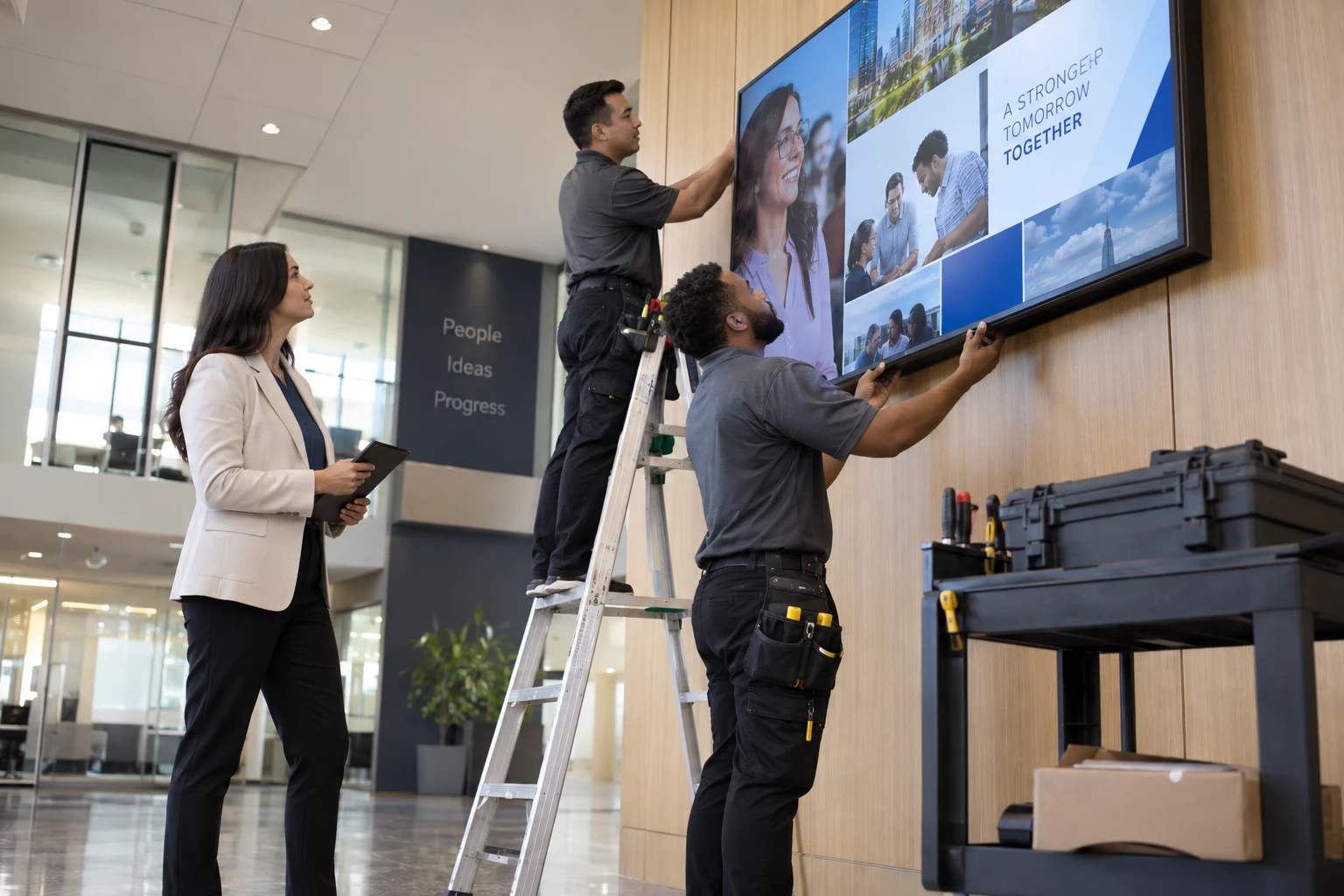
Installation can become a separate source of revenue and may include site review, display mounting, media-player installation, cabling, network connection, device configuration, testing and customer training.
Installation should be priced as a professional service rather than treated as free labor attached to the hardware sale.
4. Project Management and System Configuration
Larger deployments can involve work before and after physical installation, including customer requirements, screen locations, hardware specifications, shipping, installers, network access, user accounts, content, testing, training and rollout schedules.
This work consumes time and should be reflected somewhere in the customer price.
5. Digital Signage Software Revenue
Once the hardware is installed, the customer needs software to manage the signage.
The CMS can create recurring revenue because the customer needs continued access while the system remains active.
As the number of customers and screens grows, the software portion of the business can grow with it.
Digital Signage CMS Explained: What Resellers and Integrators Need to Know
6. Technical Support
Customers may need help after installation.
Support can be included in a monthly service package or sold at a different service level.
The provider should define what is included, when support is available, who handles platform and hardware problems, and whether on-site service is included.

7. Content Creation
Some customers need promotional slides, menu designs, video editing, motion graphics, templates or campaign creative.
Content creation may be billed by project, hour or recurring service package.
8. Ongoing Content Management
A customer may already have finished graphics but want someone else to upload content, remove expired promotions, change playlists, schedule campaigns or manage multiple locations.
This work can be sold as a monthly managed service.

9. Device Management and Monitoring
A managed service may include checking device status, identifying offline players and coordinating troubleshooting.
This is particularly relevant for MSPs and IT service providers.
How MSPs Can Add Digital Signage as a Managed Service
10. Customer Training
Training may be included in the initial project or sold separately when customers add employees, expand locations or change responsibilities.
11. Managed Digital Signage Packages
Providers can bundle software, support, device monitoring, content updates, creative services and account administration into different service levels.
How to Create Digital Signage Service Packages for Your Customers
12. Adding Screens to Existing Customers
A customer may start with one or two screens and later add displays, departments, applications or locations.
Each expansion can create additional hardware and installation revenue and may increase recurring software and service revenue.
13. Multi-Location Rollouts
A company may test signage in one location before deploying it elsewhere.
A broader rollout can create revenue from hardware, installation, software, configuration, content management and support.
How to Manage Digital Signage Across Multiple Customers and Locations
14. Selling Digital Signage to Existing Customers
AV integrators, MSPs, sign companies and marketing agencies may already have business customers that can use digital signage.
Adding signage increases the number of services sold to existing accounts.
How to Add Digital Signage to Your Existing Product Portfolio
15. Referral or Partner Relationships
Not every provider has to perform every part of the project.
Software providers, installers, creative agencies and technology companies can work together so the customer receives a complete solution.
Project Revenue and Recurring Revenue Work Together
Project revenue can include displays, players, mounts, installation, configuration, initial content and training.
Recurring revenue can include software, support, device management, content management, creative services and account administration.
A provider can decide how much emphasis to place on each layer.
Monthly Recurring Revenue vs. One-Time Digital Signage Sales
The Customer Relationship Can Become More Valuable Over Time
A relationship that begins with one screen can later include additional hardware, additional installations, software and recurring services.
The first installation can be the beginning of the account rather than the end of the sale.

What Should a New Digital Signage Company Sell First?
Start with an offer you can reliably deliver, such as hardware, installation, software and basic support.
Add services as customers request them and your company can deliver them profitably.
Price the Service, Not Just the Equipment
The provider adds value by selecting compatible equipment, configuring the platform, installing the system, training users, managing devices and supporting the customer.
How to Price Digital Signage Services for Your Customers
Build Revenue That Continues After Installation
Digital signage combines physical equipment with software and ongoing services.
A provider does not need every possible revenue stream. It needs a model it can sell, deliver and support consistently.
Read Is a Digital Signage Business Profitable? or How to Start a Digital Signage Business in 2026: A Complete Guide, or start a free Zoney trial or schedule a partner call.